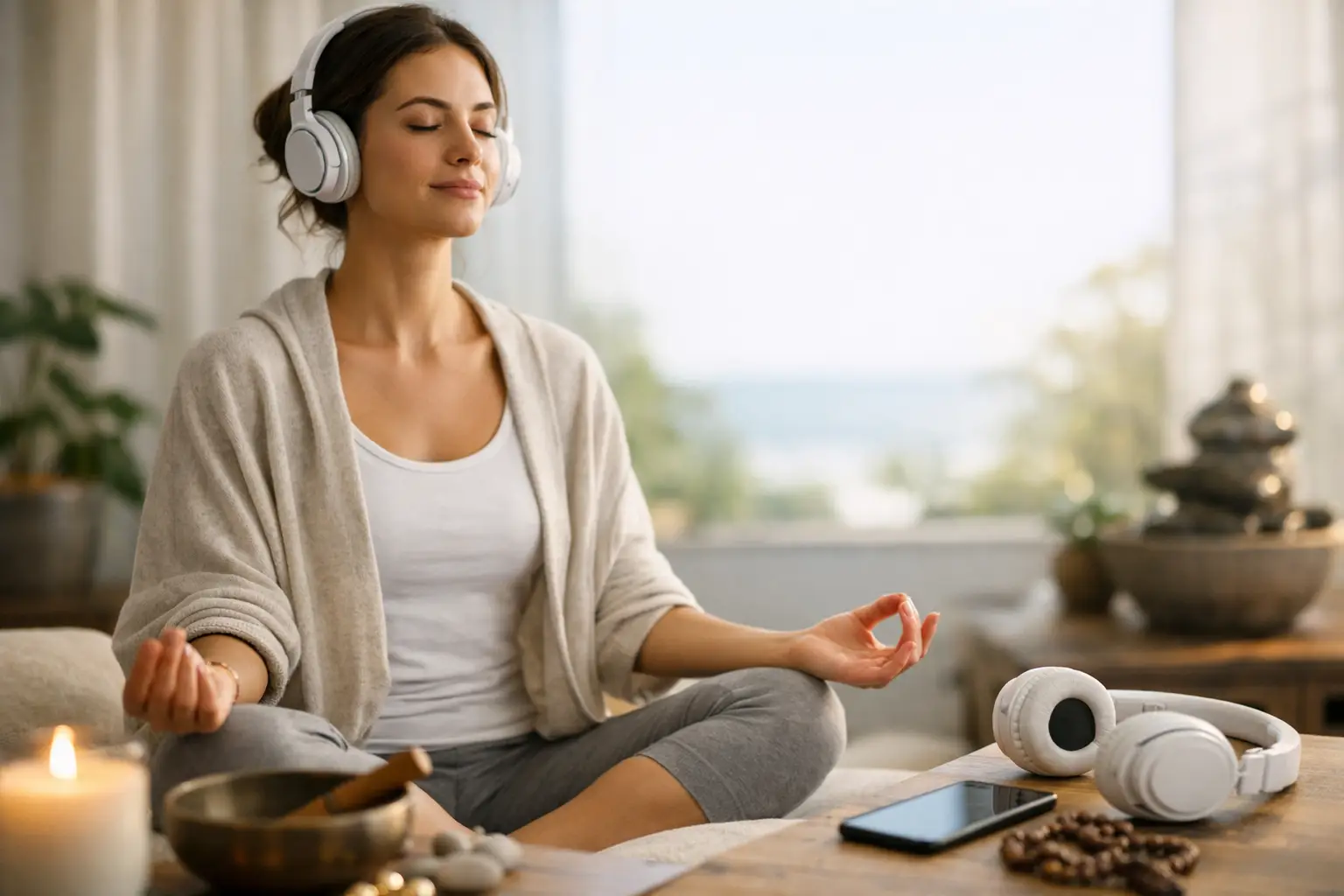
A meditation can shift in a single moment: your shoulders lower, your breath becomes fuller, and the noise of the day stops leading the conversation. The best meditation music playlists do not force that shift. They create a safe energetic container where your mind, body, and soul can remember their natural rhythm.
Music is not required for meditation, and silence will always be a powerful teacher. Yet the right sound can be deeply supportive, especially when you are moving through anxiety, grief, overstimulation, creative blocks, or a season of becoming. Think of a playlist as a gentle doorway. You still choose to walk through it.
What Makes a Meditation Playlist Truly Supportive?
The most effective meditation music is not necessarily the most beautiful track you can find. A song may be moving, cinematic, or spiritually themed and still pull your attention into memories, lyrics, or emotional stories. For meditation, the goal is usually spaciousness.
Look for music with a steady pace, gradual transitions, and enough room for your breath and awareness to stay in the foreground. Instrumental music often works well because it asks less of the thinking mind. Sounds from nature, soft ambient tones, singing bowls, gentle piano, and low-frequency drones can all support a grounding practice.
Your response matters more than any label. One person may feel held by ocean waves; another may find them distracting. A frequency track may feel calming one day and too intense the next. Awareness is the first step to ascension, and that includes noticing what your nervous system is actually telling you.
Best Meditation Music Playlists by Intention
Rather than searching for one perfect playlist for every practice, choose music that reflects the energy you are calling in. Your meditation becomes more focused when your soundscape matches your intention.
For morning clarity and new beginnings
Morning meditation music should feel clean, open, and quietly energizing. Gentle piano, light ambient soundscapes, soft chimes, or birdsong can help you meet the day without immediately absorbing everyone else’s urgency.
Avoid tracks with dramatic crescendos or heavy bass if your goal is centered focus. You are not trying to manufacture motivation. You are creating enough inner space to hear your own guidance before messages, meetings, and responsibilities begin asking for your attention.
Try a 10-minute playlist while sitting near a window or holding a warm drink. Ask yourself one simple question: What energy do I choose to embody today? Let the music hold the silence after your answer arrives.
For anxiety relief and nervous system reset
When your thoughts are racing, choose predictable, low-stimulation sounds. Slow ambient music, rainfall, brown noise, soft strings, or long singing bowl tones can reduce the feeling that you need to solve everything right now.
This is not about bypassing what you feel. It is about giving your body a signal that it is safe enough to soften. If a playlist includes sudden bells, shifting tempos, spoken affirmations, or sharp high notes, it may be less helpful during an anxious moment. The trade-off is that very minimal sound can feel boring at first, particularly if your mind is used to constant input. Stay with it for a few minutes before deciding it is not working.
Place one hand on your heart and one on your lower belly. Breathe in slowly, then exhale longer than you inhale. Let the playlist become a background current rather than another thing to perform correctly.
For deep sleep and evening release
Sleep meditation playlists work best when they are consistent. Your body learns through repetition. If you use the same soothing music during your nightly wind-down, it can become a familiar cue that the day is complete.
Choose tracks that are long, slow, and free from ads or abrupt endings. Nature sounds, low ambient drones, gentle harp, and soft sleep soundscapes are often effective. Keep the volume low enough that you could still hear your own breath.
If you wake during the night, resist the urge to search for a new track or scroll through options. That small decision-making cycle can wake the mind back up. Build a trusted playlist ahead of time, set it to play for 30 to 60 minutes, and let rest be your only assignment.
For emotional healing and heart opening
Some meditations are meant to calm you. Others are meant to help you feel what has been waiting beneath the surface. For heart-centered practice, gentle piano, soft vocal tones without clear lyrics, acoustic textures, and spacious healing music can invite emotional release without overwhelming you.
This type of playlist may bring up tears, memories, or a sudden wave of tenderness. That does not mean you have chosen the wrong music. Emotion is energy moving, and it can be part of healing your mind, body, and soul. Still, honor your capacity. If you begin to feel flooded, open your eyes, place both feet on the floor, and switch to a more grounding sound.
You do not need to explain every feeling that comes through. Sometimes your heart simply needs a few quiet minutes to be witnessed.
For intuition, energy work, and spiritual practice
For oracle card pulls, journaling, visualization, or energy work, choose music that feels expansive without becoming theatrical. Crystal bowls, subtle atmospheric tones, meditation flutes, and spacious instrumental tracks can support a sense of connection to your inner wisdom.
Be discerning with frequency-based playlists. Labels such as 432 Hz, 528 Hz, or solfeggio frequencies can be meaningful rituals for some people, but they are not a shortcut to instant transformation. What matters most is whether the sound helps you become more present, grounded, and receptive. If it makes you feel pressured to have a mystical experience, let it go.
At Open Up Wide, the deeper invitation is always to make a new choice for your inner reality. Music can support that choice, but your willingness to listen to yourself is where the real shift begins.
How to Build a Playlist You Will Actually Use
A beautiful playlist is only useful if it fits into your life. Start by creating three short playlists instead of one giant collection: one for mornings, one for emotional reset, and one for sleep. Keep each one between 10 and 30 minutes so your practice feels approachable on busy days.
Begin with a track that helps you arrive. Choose one or two steady middle tracks where you can settle into breathwork, stillness, or guided reflection. End with something slightly warmer or lighter, especially for daytime practice, so you return to your day feeling present rather than foggy.
Test your playlist during a real moment of need, not only when you are already peaceful. Notice whether you feel more settled after five minutes. Notice whether you want to turn the sound down, skip ahead, or reach for your phone. These are useful signals. Your playlist can evolve as you do.
A Few Choices That Can Change the Experience
Headphones can make sound feel immersive, but they are not always the best choice. If you are prone to feeling disconnected from your surroundings, a speaker at low volume may feel more grounding. For sleep, avoid earbuds if they are uncomfortable or likely to wake you later.
Lyrics are another personal decision. Devotional chants or affirming words may support your practice when the message resonates. On the other hand, familiar lyrics can pull you into analysis or make you sing along internally. If your mind is already busy, instrumental tracks usually offer more room to rest.
Finally, do not confuse intensity with depth. A profound meditation can happen with one quiet piano note, a soft rain track, or no music at all. Your practice is not measured by how far away you travel. It is measured by how honestly you return to yourself.
Tonight, choose one playlist, set aside ten undisturbed minutes, and let the first breath be your reminder: you are allowed to come home to your own energy.