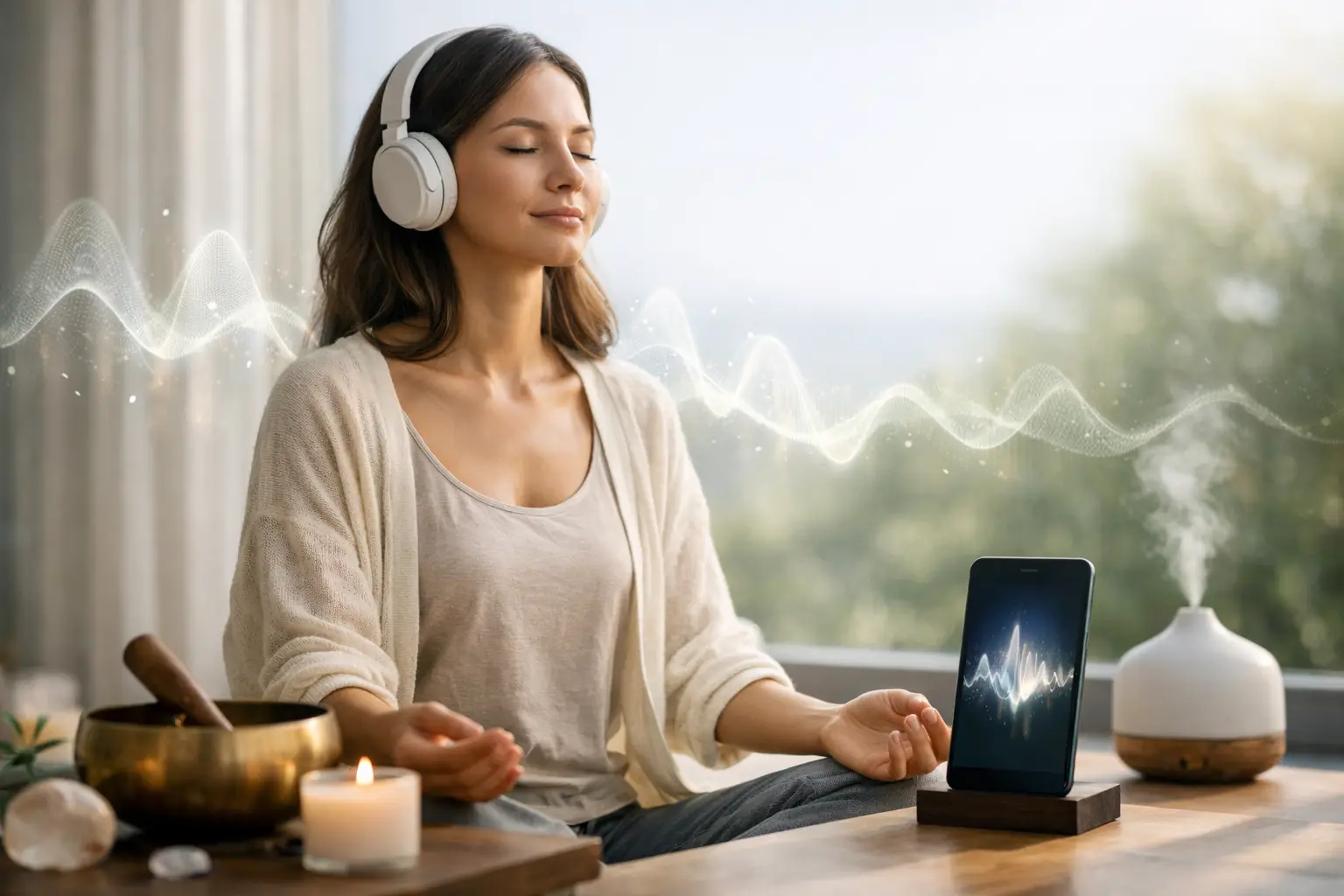
A song can change the atmosphere of a room before you have explained a single feeling. Your shoulders drop. Your breath becomes slower. The mental conversation that has been running all morning softens at the edges. That is where healing frequency music benefits can become meaningful: not as a promise that a track will fix everything, but as a supportive practice that helps you return to yourself.
For many people on a spiritual path, sound is more than background noise. It is a doorway into presence. It can help create the inner conditions for meditation, reflection, emotional release, prayer, journaling, or simply a gentler moment between one demand and the next. When you use it with intention, music can become part of the new choice that creates a new reality and a new future.
What Healing Frequency Music Is Really Offering
Healing frequency music usually refers to sound designed around particular tones, tuning systems, binaural beats, ambient layers, singing bowls, chimes, or nature sounds. You may see tracks labeled with frequencies such as 432 Hz, 528 Hz, 174 Hz, or 963 Hz. Each is often paired with an intention, such as grounding, heart opening, rest, emotional balance, or spiritual connection.
The metaphysical language around these frequencies can be inspiring, but it deserves a grounded approach. There is not strong scientific evidence that a specific number of hertz can diagnose, treat, or cure a physical or mental health condition. Your experience may still be real and valuable. Sound can influence attention, mood, breathing patterns, and the way safe your nervous system feels. The benefit is often less about a magical number and more about the ritual, environment, expectation, and emotional permission the music creates.
Think of frequency music as an energetic companion rather than a replacement for medical care, therapy, sleep support, or medication prescribed by a qualified professional. If you are moving through trauma, panic, depression, chronic pain, or another health concern, let sound be one part of your care circle, not the entire circle.
Healing Frequency Music Benefits You May Notice
The most honest answer is that it depends. One person may feel deeply settled by a low, sustained drone, while another may feel restless or emotionally activated. Your history with music, your sensory sensitivity, the volume, and the moment you choose to listen all shape the outcome.
A gentler transition into meditation
Meditation can feel difficult when your mind is full, especially if silence makes every unfinished task louder. Slow ambient sound gives the mind a soft point of focus. Instead of fighting your thoughts, you can let the music hold the edges of the practice while you notice your breath, body, and inner wisdom.
This is especially useful for people who tell themselves they are bad at meditation. You do not need to force a blank mind. You only need a small opening where awareness can enter.
Support for stress release and nervous system regulation
A steady, quiet soundscape may make it easier to move out of high alert. When music invites slower breathing and a calmer pace, it can support a settling ritual after work, before sleep, or following an emotionally charged conversation.
That does not mean difficult feelings disappear on command. Sometimes the opposite happens: once your body feels safer, grief, anger, or exhaustion may finally rise to be acknowledged. This can be a healthy part of emotional processing, but go slowly. Pause the track, open your eyes, drink water, or reach out for professional support if the experience feels overwhelming.
More focus for reflective work
The right instrumental track can create a container for journaling, studying spiritual material, pulling oracle cards, or setting intentions. Lyrics can be distracting when you are trying to hear your own inner voice. Repetitive, lyric-free music often gives the analytical mind less to chase.
Try matching the sound to the work. Soft nature sounds may support morning pages; a warm, steady tone may help with goal setting; and spacious music may feel right before intuitive practice. Your own response matters more than the label on a playlist.
A more intentional sleep routine
Many people use calming music as a cue that the day is ending. Over time, hearing the same gentle track at bedtime can become part of a familiar wind-down pattern. Dim the lights, place your phone out of reach, and let the sound signal that you no longer need to solve tomorrow tonight.
For sleep, simpler is often better. Choose music without sudden volume changes, sharp bells, or spoken affirmations that might pull you back into alertness. Keep the volume low enough that it feels like atmosphere rather than a performance.
A sense of spiritual connection
There is also a personal, sacred dimension that cannot be reduced to a study or a playlist description. A particular bowl, tone, or vocal harmony may help you feel connected to your heart, your guides, nature, God, the universe, or the loving presence you understand as greater than yourself.
You do not have to prove that feeling to anyone for it to matter. Let it be an invitation to listen inwardly. If a track helps you become more compassionate, honest, and present in your life, that is a meaningful outcome.
How to Create a Healing Frequency Music Practice
Consistency matters more than finding the perfect frequency. Start with ten minutes at a time, ideally at a moment when you can be uninterrupted. Choose one track that feels calming or expansive in your body, not merely one with a compelling claim in its title.
Before pressing play, name a simple intention. It might be, “I allow my body to settle,” “I am available for clarity,” or “I release what I do not need to carry today.” Then sit or lie down comfortably and let your attention rest on three places: your breath, physical sensations, and the emotions that are present.
When the music ends, resist the urge to immediately scroll. Give yourself one minute of quiet. Notice whether you feel calmer, clearer, more emotional, or unchanged. There is no wrong answer. This brief check-in teaches you which sounds genuinely support your energy and which ones do not.
A short practice can fit into ordinary life. Use it while making tea before a demanding day, after a workout, during a bath, or before a reading or meditation. The point is not to escape your life. It is to meet your life with more awareness.
Choosing Music That Feels Safe and Supportive
Do not assume a track is right for you because it is popular or called “healing.” Trust your body. If you feel tense, headachy, agitated, dissociated, or unable to settle, turn it off. Some people are sensitive to headphones, binaural beats, low bass, or repetitive tones. Speaker playback at a gentle volume may feel better.
Be thoughtful with emotional intensity, too. Deep sound journeys can bring up memories or feelings you were not expecting. Choose a time when you have space to decompress rather than listening in the car before a stressful appointment. For deeper inner work, combine music with grounding practices such as feeling your feet on the floor, holding a warm drink, or writing down what surfaced.
If you live with tinnitus, migraines, seizures, significant sound sensitivity, or a mental health condition affected by sensory stimulation, speak with an appropriate health professional before experimenting with binaural beats or intense audio sessions. Spiritual wellness works best when it honors the whole person, including your practical needs.
Let Sound Become a Choice You Return To
Healing is rarely one dramatic moment. More often, it is a series of small returns: returning to your breath, your body, your truth, and the possibility that you can respond differently than you did yesterday. Frequency music can support that return when you approach it with curiosity instead of pressure.
Choose the sound that helps you feel more here. Let it remind you that your inner world deserves care, that rest is not something you must earn, and that even a few quiet minutes can shift the energy of what comes next.